

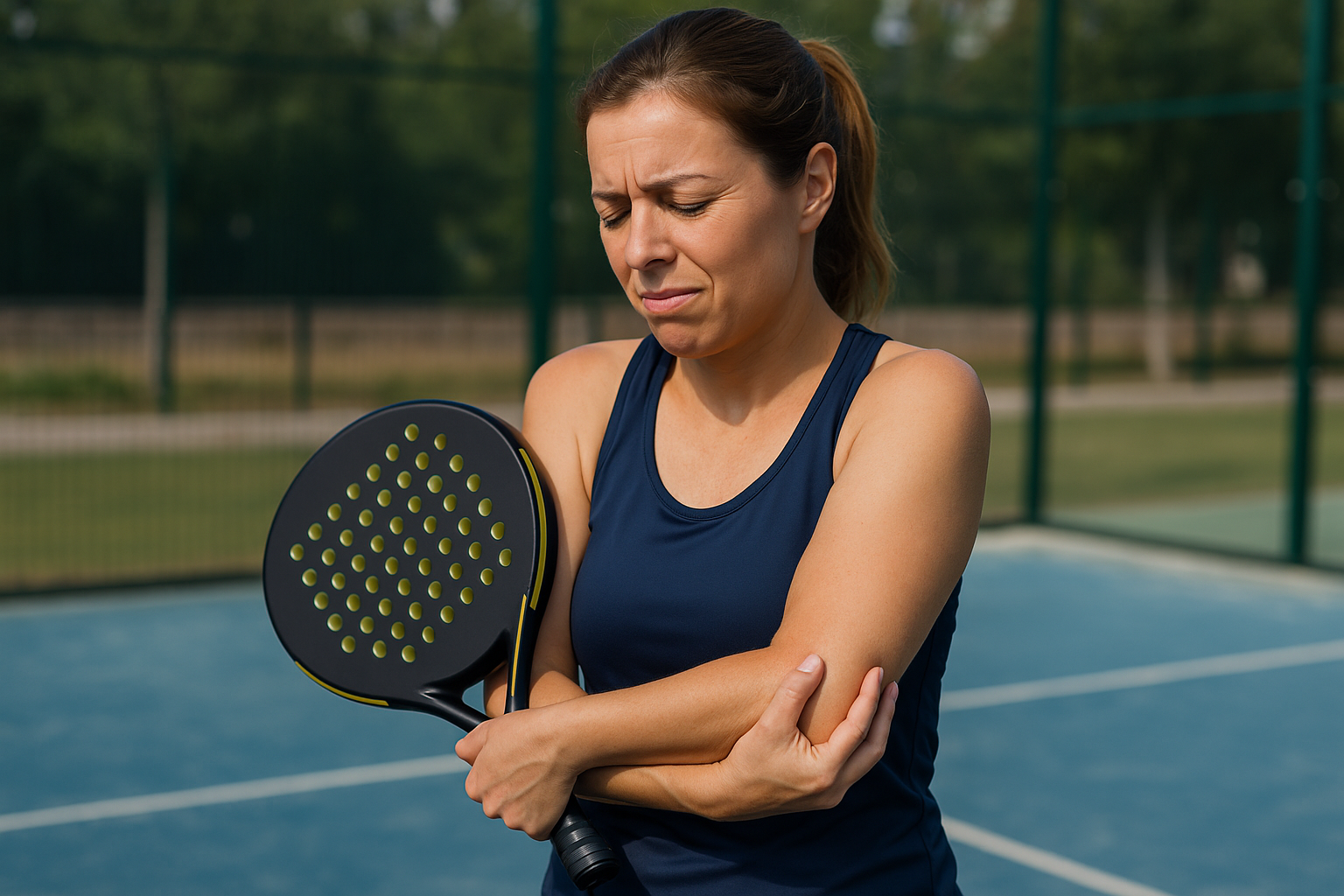
One of the most common issues among players of all levels in padel is elbow pain, known as lateral epicondylitis or “tennis elbow”. This injury, caused by repetitive movements and tendon stress, can significantly affect your game if left untreated.
In this article, we’ll explore the main causes, prevention strategies, effective treatments, and recovery times. Plus, we’ll include real experiences from players who have overcome this issue.
What is Elbow Pain in Padel?
Lateral epicondylitis is an inflammation or degeneration of the tendons that connect the forearm muscles to the lateral epicondyle (the bony bump on the outer elbow). Although it’s called “tennis elbow”, it’s equally or even more common in padel due to frequent shots like volleys, backhands, and smashes.
Main Symptoms
- Pain on the outer side of the elbow, sometimes radiating to the forearm or wrist.
- Discomfort when gripping the racket or extending the wrist.
- Tenderness when touching the affected area.
- Weakness in the forearm, making powerful shots difficult.
Common Causes
- Repetitive Movements: Especially volleys and powerful smashes.
- Poor Technique: Overusing the wrist instead of the full arm.
- Inappropriate Racket: Heavy rackets, high balance points, or hard cores increase vibration.
- Wrong Grip Size: Too thin or worn grips force more hand tension.
- Overuse: Long matches or playing multiple days without sufficient rest.
- Weak Musculature: Weak forearm or core muscles put extra strain on the elbow.
- Age: Tendons lose elasticity between ages 30 and 50.
Many players describe that the issue doesn’t arise overnigh:
“I felt slight discomfort after long matches. Ignoring it was a mistake because it worsened. Switching to a lighter racket and strengthening my forearm saved me.”
How to Prevent Elbow Pain in Padel
Following smart practices makes a huge difference:
1. Choose the Right Racket
- Lightweight: 340–360 grams.
- Low Balance: Closer to the handle.
- Soft Core Foam: Reduces vibrations.
- Correct Grip Size: Adding an overgrip helps fine-tune the thickness.
“Switching to a round racket with soft foam was key. I also learned not to overload my wrist in backhands. Since then, I haven’t felt any pain.”
2. Improve Your Technique
- Use your entire body during shots—don’t rely solely on the wrist.
- Load and unload your body energy correctly, especially in backhands.
3. Warm Up and Stretch
- Specific warm-up for wrists, shoulders, and forearms (10–15 minutes before playing).
- Stretching after matches, focusing on wrist extensors.
4. Strengthen Your Muscles
- Include wrist flexion and extension exercises with resistance bands or light weights.
- Strengthen your core and shoulders to improve overall stability.
5. Listen to Your Body
- Don’t ignore discomfort—reduce intensity or rest if you feel pain.
- Plan recovery days during the week.
6. Use Protective Gear
- Elbow braces can temporarily relieve tension, but they don’t fix the underlying causes.
Treatment and Solutions
If elbow pain has already appeared, act quickly:
1. Consult a Specialist
A sports doctor or physiotherapist can confirm the diagnosis and recommend specific treatment.
2. Active Rest
- Pause padel temporarily but keep gentle arm movements.
- Avoid heavy lifting or painful activities.
3. Effective Therapies
- Manual therapy, dry needling, and neurodynamics.
- Diathermy (deep heat treatments like INDIBA) or shockwave therapy for chronic cases.
“Recovery took about two months. My physio worked on strength exercises and applied shockwave therapy. Gradual return to playing helped prevent relapse.”
4. Cold and Anti-Inflammatories
- Apply ice (15–20 minutes every 3–4 hours) during the first 48–72 hours.
- Consult a doctor about anti-inflammatory medications.
5. Equipment Adjustments
- Switch to a softer, lighter racket if needed.
- Regularly replace and adjust grips.
How Long Does It Take to Heal?
- Mild cases: 2–4 weeks with proper rest and adjustments.
- Moderate cases: 6–8 weeks.
- Chronic cases: Up to 6 months with intensive therapy.
Returning to play too soon risks chronicizing the injury—be patient and follow professional advice.
Tips to Prevent Relapses
- Continue forearm and core strengthening even after recovery.
- Check your technique regularly with a coach.
- Avoid back-to-back intense matches.
- Adjust your equipment as soon as you notice any discomfort.
- Stop playing if pain reappears and consult a specialist.
Conclusion
Elbow pain is common in padel but completely manageable with the right habits. Using appropriate equipment, improving technique, warming up correctly, and listening to your body are essential steps to protect yourself.
If pain arises, seek professional help, follow a recovery plan, and adjust your training. With patience and care, you’ll be back on court enjoying your game at full strength.
Have you ever experienced elbow pain while playing padel? Share your story in the comments and help fellow players!Legal Note: This article is for informational purposes only and does not replace professional medical advice. Please consult a specialist for personalized diagnosis and treatment.