

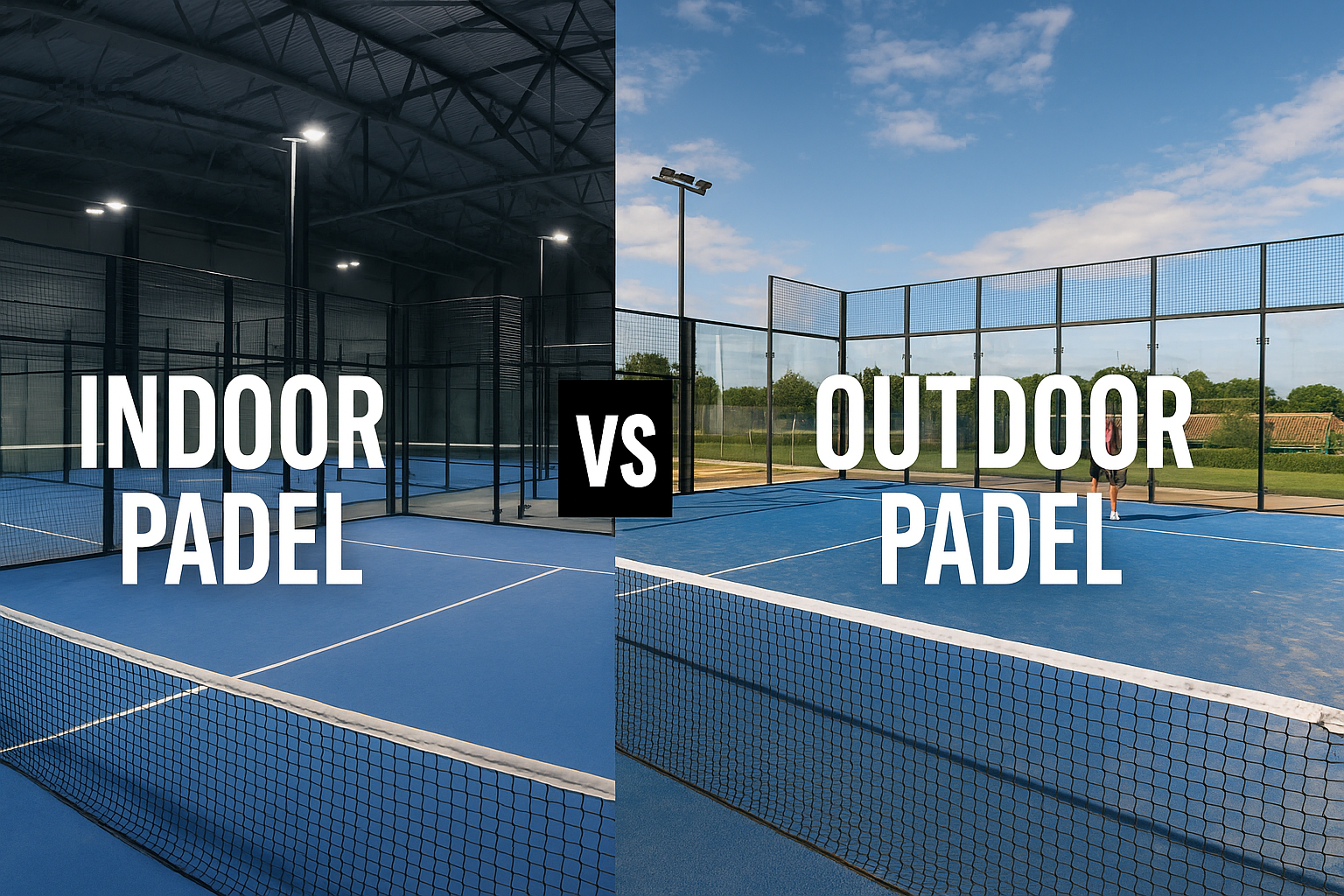
Initially, outdoor courts dominated the landscape, but the growing popularity of padel and the need for controlled playing conditions have driven a rise in indoor court construction.
Key Differences Between Indoor and Outdoor Padel
Indoor padel is played on covered courts protected from the weather, while outdoor padel takes place in open-air settings, exposed to wind, sunlight, and rain. These differences significantly affect both gameplay and player experience:
- Weather Conditions: Outdoor courts are affected by wind and sunlight, requiring tactical adjustments. Indoor courts offer stable conditions, with artificial lighting and no climate interference.
- Court Height: Indoor courts have ceilings (usually 7 meters or more), which can restrict high lobs. Outdoor courts have no height limits, allowing more aggressive lobbing and open strategies.
- Maintenance: Outdoor courts need more upkeep due to weather exposure. Indoor courts generally stay in better condition, although they may accumulate humidity in warmer climates.
- Initial Investment: Outdoor courts are cheaper to build. Indoor courts require more detailed planning to make efficient use of available space.
Pros and Cons
Outdoor Padel
Pros:
- Natural Experience: Playing outdoors offers a sense of freedom and connection with nature.
- Strategic Variety: No ceiling means high lobs are unrestricted, and players can use the wind to their advantage.
- Cost-Effective: Easier to build and maintain in emerging markets.
Cons:
- Weather Dependency: In South Africa, summer rains in Johannesburg and winter in Cape Town often disrupt play.
- Sun and Wind: Harsh sun can blind players, and wind affects shot precision.
- Wear and Tear: Outdoor exposure accelerates deterioration and increases long-term costs.
Indoor Padel
Pros:
- Year-Round Play: Vital in cities with seasonal rains or strong winds.
- Controlled Conditions: No weather variables, making gameplay more predictable.
- Lower Maintenance: Courts stay in better shape, reducing operating costs.
Cons:
- Height Limitations: Ceilings restrict lobs and certain tactics.
- Higher Construction Costs: Building indoor facilities requires greater investment.
Preferences
Padel in South Africa began predominantly outdoors, benefiting from the country’s mild climate. However, the rise in indoor clubs, especially in urban areas, reflects changing preferences. Amateur players often prefer indoor courts for:
- Rain Protection: Particularly in Johannesburg, where heavy summer rains are common.
- Comfort: Avoiding extreme sun or heat, especially after work hours.
Still, many enthusiasts enjoy the relaxed vibe of outdoor padel—when weather allows.
Professional Perspective
In the pro scene, preferences vary, though there’s a clear trend toward indoor padel at high-level events:
- Consistency: Players like Paquito Navarro point out that indoor matches are more technical and fair, as weather no longer plays a role.
- Atmosphere: Indoor events such as Premier Padel tournaments provide intense crowd energy and acoustics.
Yet, outdoor tournaments like Roland Garros are gaining traction for their scenic appeal and the challenge of adapting to conditions.
Professionals usually train indoor for technical sessions, while outdoor is preferred for simulating real tournament conditions.
Padel in South Africa is transitioning from being an outdoor-dominant sport to one where indoor courts are on the rise—driven by climate needs and demand for consistency. Where do you prefer to play?